Showing posts with label classic. Show all posts
Showing posts with label classic. Show all posts
Tuesday, June 11, 2013
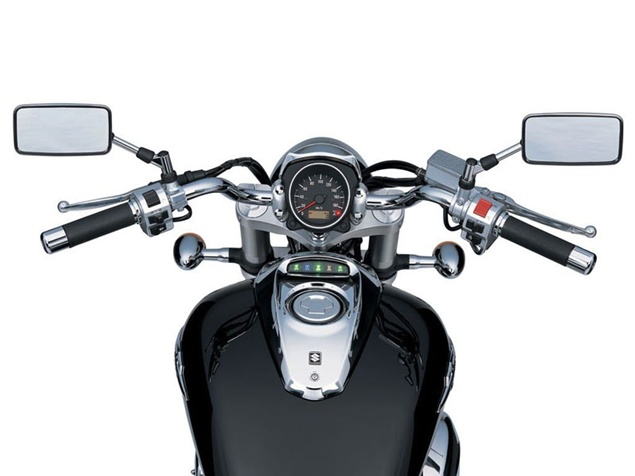
2012 Suzuki Boulevard C50T Classic

Suzuki Boulevard C50T Classic 2012 introduced by Suzuki United States with retro body classic. Uses based by Suzuki C50T with its different on the windshield, passenger backrest and saddlebags. This Suzuki Boulevard C50T that suitable for touring sold at priced US$ 7.999 claimed more competitive than its competitors.

The classic body looks charming with dominance touch of chrome. A long handlebar makes it easy to maneuver. Additionally seats split model with double mufler models confirmed the classic aura. Supported by V-twin engine a capacity of 805cc is ready to compete with Honda Shadow Aero and Kawasaki Classic Vulcan.


Tuesday, May 21, 2013
1974 92 Mini British Open Classic


This is a near perfect, highly collectible, Rover British Open Classic. This is a very rare car. They only made 1000 of these and only 10 are known to exist in the USA. Jay Leno has one of them. Make sure to watch my video on Youtube
History
The Mini British Open Classic was a limited run of 1000 cars for the UK market. And two limited runs for the German market, 1st run in 1992 and the 2nd in 1999, the last run was based on the Cooper MPi Sportpack
ENGINE & TRANSMISSION
# 4 cylinder, transverse OHV, 1275cc. 50 PS (EEC) @ 5000 RPM with 3 way catalyst.
SUSPENSION
# All independent, rubber cone springs, telescopic dampers.
STEERING
# Rack and pinion.
BRAKES
# Servo-assisted, dual circuit system, discs front, drums rear.
WHEELS & TYRES
# 12” Sports style alloy wheels with 147/70 x 12 low profile tyres.
ELECTRICAL ( 12 volt negative earth system )
# Two column stalks for indicators, horn, headlamp dip/main beam/flash, 2 speed wipers with flick wipe and electric screen washers. Hazard warning lamps. Heated rear window, side repeat flashers. Rear fog guard lamp. Twin reversing lamps.
IN-CAR ENTERTAINMENT
# Electronic tune 3 band stereo radio/cassette (R552) with two speakers and wing mounted aerial.
INSTRUMENTATION
# Twin pack binnacle incorporating speedometer and fuel level and water temperature gauges.
# Warning lights for direction indicators, main beam, ignition/no charge, low oil pressure, brake circuit failure, heated rear window and rear fog guard lamp.
INTERIOR FEATURES
# Countryman Tweed and leather seat facings (Stone Beige) with green piping and sewn in badge.
# Upholstered front seat head restraints in Countryman Tweed.
# Rake adjusting front seat squabs.
# Countryman Tweed trimmed door and quarter casings (Stone Beige) with chrome mylar strip.
# 3-spoke leather trimmed steering wheel (Stone Beige) with “Mini” badge on centre pad.
# Full width front parcel shelf, with trimmed and padded rails ( colour-keyed).
# Fresh air/demister with face level air vents.
# Fascia mounted ash tray.
# Colour keyed front and rear seat belts.
# Anti-dazzle rear view mirror.
# Twin sun visors with passenger’s vanity mirror.
# Rear combination boxes.
# Twin Door bins.
# Cut pile carpet.
# Gear lever gaiter.
# Handbrake grip
# Tinted glass
# Opening rear quarter windows.
BODY FEATURES
# Power operated fabric sunroof with switch.
# Body colour door mirrors/number plate lamp cover.
# Chrome bumpers, door and bootlid handles and tailpipe finisher.
# Chrome effect grille.
# Black wheel arch extensions and sill finisher.
# Laminated windscreen.
# Locking fuel filler cap.
# “British Open Classic” decals on rear wings and bootlid with side coachline.
# “Mini” shield bonnet badge.
# Comprehensive anticorrosion treatment with six year warranty.
ECONOMY
# Imperial mpg.
* Urban 37.3 mpg
* @ 56 mph 54.2 mpg
* @ 76 mph 33.8 mpg
# Metric 1/100 km
* Urban 7.6 l/100 km
* @ 90 km/h 5.2 l/100 km
* @120 km/h 8.4 l/100 km
PERFORMANCE
* 0-60 mph 13.4 secs
* 30-50 mph (4th gear) 10.9 secs
* 50-70 mph (4th gear) 14.9 secs
* Max Speed 87 mph
* Torque (EEC) 89 NM @ 2600 rpm
INTERIOR TRIM
# Fabric: Countryman Tweed and Leather.
# Colour: Stone Beige.
EXTERIOR BODY COLOURS
# British Racing Green Metallic.
The 1992 advert featured in Mini World
The 1999 advert for the 2nd production run in Germany
Sunday, May 19, 2013
2012 Kawasaki Vulcan 1700 Classic Review
2012 Kawasaki Vulcan 1700 Classic Review
Packed with Style, Thrumming with Power
 The system offers a natural throttle feel because the APS is activated by a throttle body pulley connected by cables to the throttle grip. That easy-reach handlebar facilitates slow-speed maneuvering and helps maximize rider confidence. Adding to the light and easy handling are suspension components matched to the Vulcan 1700 Classic’s intended mission. An elegantly simple rear swingarm with twin air-assisted shocks provides 3.1 inches of rear suspension travel, and features air spring preload and four-way rebound adjustment. Up front, a large 43mm fork offers precise steering feedback, a supple ride and 5.5 inches of travel.
The Vulcan 1700 Classic rolls on nine-spoke cast wheels that run fat, tubeless tires – 130/90 front and 170/70 rear – that complement its muscular styling. Dual 300mm front disc brakes featuring twin-piston calipers and a single 300mm rear disc brake with a two-piston caliper help bring this stylish machine to steady, powerful stops.
Packed with Style, Thrumming with Power
The Vulcan 1700 Classic rolls on nine-spoke cast wheels that run fat, tubeless tires – 130/90 front and 170/70 rear – that complement its muscular styling. Dual 300mm front disc brakes featuring twin-piston calipers and a single 300mm rear disc brake with a two-piston caliper help bring this stylish machine to steady, powerful stops.
Thursday, May 16, 2013
TRITON A Cult Classic Cafe Racer

Of all the legendary hybrid bikes, Norwin, Tribsa and Triton probably are the best known merged bikes. Hybrid bikes, back in the 60s meant best of both worlds. A superior frame to suit the ride and do the corners complimented by an excellent power driven machine.
These are motorcycles of the highest order. These are not Look-at-me or Touch-me-not types, these are solely to be driven hard, very hard.
The TRITON as the name suggest is a hybrid of TRIumph & NorTON. The Norton frame is of course hallowed, doing its wonder in the NORVIN too and the Triumph is known for its engines allround capabilities. The chasis is from the Norton Featherbed and the engine usually comes from the Triumph T110 or the twin carb T120.


Lets get to the basics first, there are no two similar Tritons because all were customized. So even looks wise, there is bound to be differences between two tritons. The specifications mentioned are in general.
Looks wise, there is still no Cafe Racer which can beat the Triton. The 650cc & 750cc (usually these were the engines used) air cooled twin engine naked cafe racer weighs around 180kg and belts up roughly 45 bhp and above according to the engine capacity and tuning timings, which can reach speeds in excess of 170 kmph. Of course you will need to kick start to hear the engine warming up and of course the exhaust sound is legendary. The wheelbase of the featherbed is rather long, but it gels perfectly with the beautiful Triumph engine and the aluminum tank and those beautiful exhausts. Drum brakes does the duty on both the wheels, all in all, its an art!
The wheelbase helps in the incredible stability that the Featherbed offers, the legendary engine with leap forward no matter how low your rpm meter reads, its fast, itslethal, just the Perfect way motorcycles are meant to be! But of course you will be recieving a fair ammount of vibrations anytime the needle shoots north of 120 kmph. But then, you do expect it and thats the *feel* of a Cafe Racer. Perfect! It will attract attention with the loud exhausts yelling here I am!. This motorcycle is really made for an enthusiast.


The Triumph twin-cylinder engines besides giving good performance and reliability, could be easily tuned for greater power by the addition of high-profile camshafts, high compression pistons, twin carburettors or fuel injectors which were amongst the more common power contributing modifications. There was also a Weslake 8 valve head available for the Triumph.
Among the three names of Norton, Triumph and BSA, the Triumph engine was the most dependable. For the Norton, over 7000 rpm the pistons were incapable of handling the heatand vivrations, the BSA 650 had a bronze bush main bearing on the right hand side, doubling as the crank oil feed, with a lack of effective crankshaft end play control, that all had difficulty staying together when thrashed, while the Triumph vertical twin used a ball on the timing side, and a roller on the other, with the oil feeding through a separate bronze bush in the outer right hand engine side cover. It gave the Triumph the edge over the other two. There was also the Quaife five speed.


While many motorcycle dealers made equipment for Triton conversions like readymade kits, some would sell complete built up Tritons. The most important part required are the engine mounting plates and several different designs exist that can affect the engine placement and therefore the handling. The lower the engine is mounted the better the handling achieved from the Norton frame. Probably no two Tritons are the same. It was basically of course the same but with add ons, tunings and timings, the end result would be - a beast produced but with different configurations, because there was no official Triton, they were all customized according to the rider. Of course there has to be similarities, I mean, its a Cafe Racer, right? So clip ons had to come, a stripped engine had to come, rear-sets had to come, must be a single seat and stuff like that. More than a classic, it was acult motorcycle. Not a classic because as mentioned, there was no official Triton, but the combination proved so deadly, that everyone was rushing to have his own Triton. But along with fame, came the down bits too. People were so obsessed with the beauty, that some enthusiasts would just beautify their Tritons and it would be more for show than for go. People are still building their own Tritons from scrap. You can find a Featherbed from a dealer, the T120 is still widely available in the e-bay kind of markets, so all you need is the desire. There are many clubs around the world who will help you build your Triton and you can start by asking the Triton Owners Club where you can also learn from other owners experience. Then there is Dave Degens Dresda and Unity Equipe, who also specializes in Tritons. FYI, British builder Dave Degens won the Barcelona 24-hour race in 1965 and 1970 on bikes he had constructed himself. The Bike Shed has a beautiful 1955 Triton featured. Some good reads can be found here and here.


Although later, Tritons started becoming a Show Bike, the original idea behind the Triton was simple. A powerful Triumph engine into a Norton "Featherbed" frame and you had a fast, affordable and reliable bike, with looks to kill and die for. The general triton would have the frame, gearbox, clutch, suspension and brakes fron the Norton. A set of specialized alloy engine plates enabled the Triumph engine to mate with the Norton frame. The tank would usually come from a Manx Norton and so would the seat. Hand made clip-on handlebars, chromed headlamp and rear-set footrests to complete the Cafe Racer motto along with those swept-back beautiful exhaust pipes which were by far from what they were also supposed to do -reducing noise, that is. The tank could be chromed or single coloured as featured in the bikes here. So the end result could vary from a basic to exotic. Some of the Tritons easily clocked a genuine 210 kmph. To take home the main points, although the Tritons differed from each other, the original concept of tritons were machines which were genuine, fast, relaible racer having the best frame and engine the market had to offer during the period. What more can a bike demand to become a Cult Classic?


Tuesday, May 14, 2013
2011 YAMAHA VINO CLASSIC
 |
| 2011 Yamaha Vino classic |
Classic retro style straight out of the film, meets modern Yamaha engineering.
Super-economical to operate, easy to park, very convenient transportation.
Quality paint and chrome look new for a long time.
Spacious locking storage compartment is perfect for backpacks and groceries.
Vino Classic achieves fuel economy up to about 110 mpg ** with a fuel tank that holds 1.2 gallons of gasoline.
| ENGINE | |
| Type | 49cc liquid-cooled 4-stroke single, SOHC, 3 valve |
| Bore x Stroke | 38.0mm x 43.5mm |
| Compression Ratio | 12.0:1 |
| Fuel Delivery | Teikei 14mm |
| Ignition | CDI |
| Transmission | V-belt automatic |
| Final Drive | V-belt |
 | |
| CHASSIS | |
| Suspension / Front | Telescopic fork, 2.3-in travel |
| Suspension / Rear | Single shock, 2.1-in travel |
| Brakes / Front | 110mm drum |
| Brakes / Rear | 110mm drum |
| Tires / Front | 90/90-10 |
| Tires / Rear | 90/90-10 |
| |
| DIMENSIONS | |
| Length | 65.6 in |
| Width | 24.8 in |
| Height | 39.6 in |
| Seat Height | 28.1 in |
| Wheelbase | 45.7 in |
| Ground Clearance | 3.3 in |
| Fuel Capacity | 1.2 gal |
| Fuel Economy** | 110 mpg |
| Wet Weight*** | 178 lb |
Subscribe to:
Posts (Atom)